I’ve been experimenting with using white gel pen to add brighter highlights. These shiny eyes in the dark put my son in the mind of Gollum from The Hobbit.
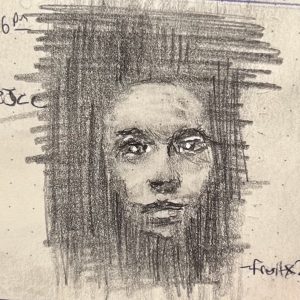

I’ve been experimenting with using white gel pen to add brighter highlights. These shiny eyes in the dark put my son in the mind of Gollum from The Hobbit.
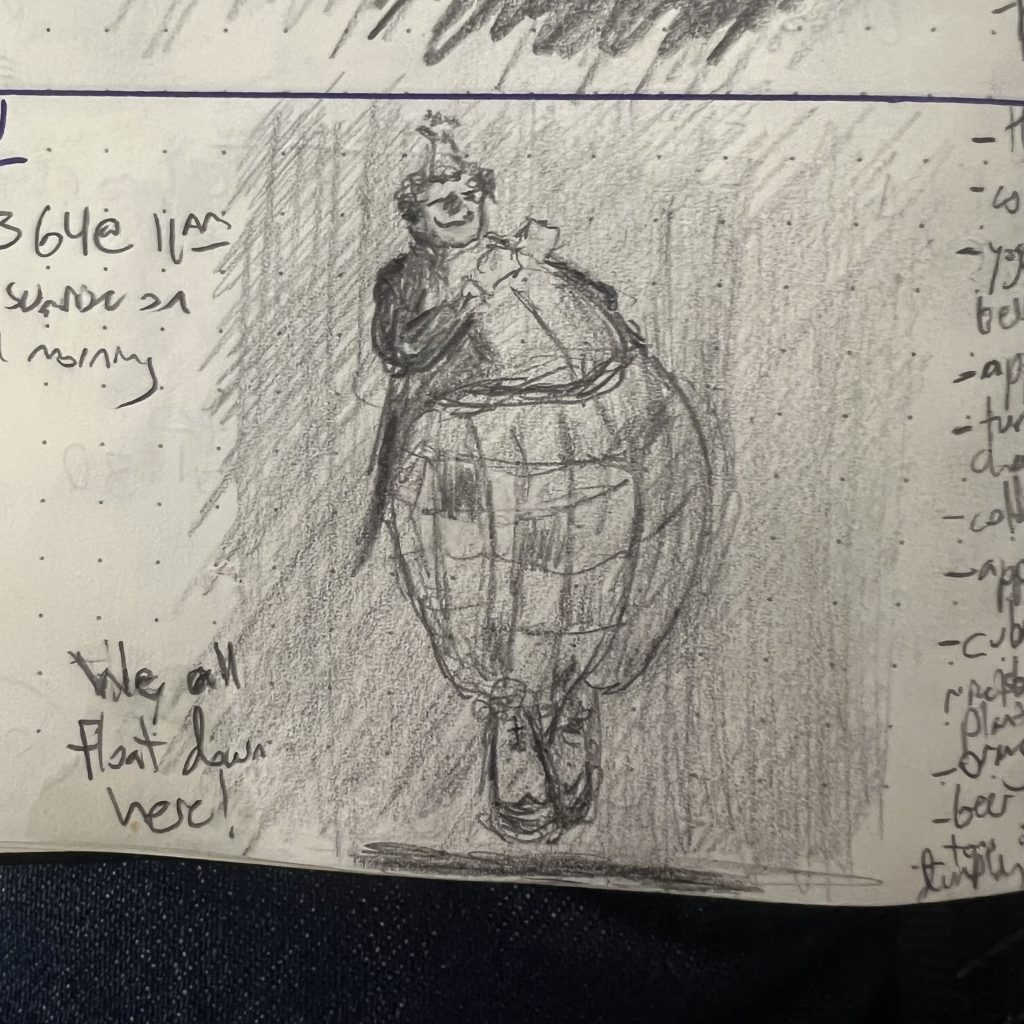
see also:
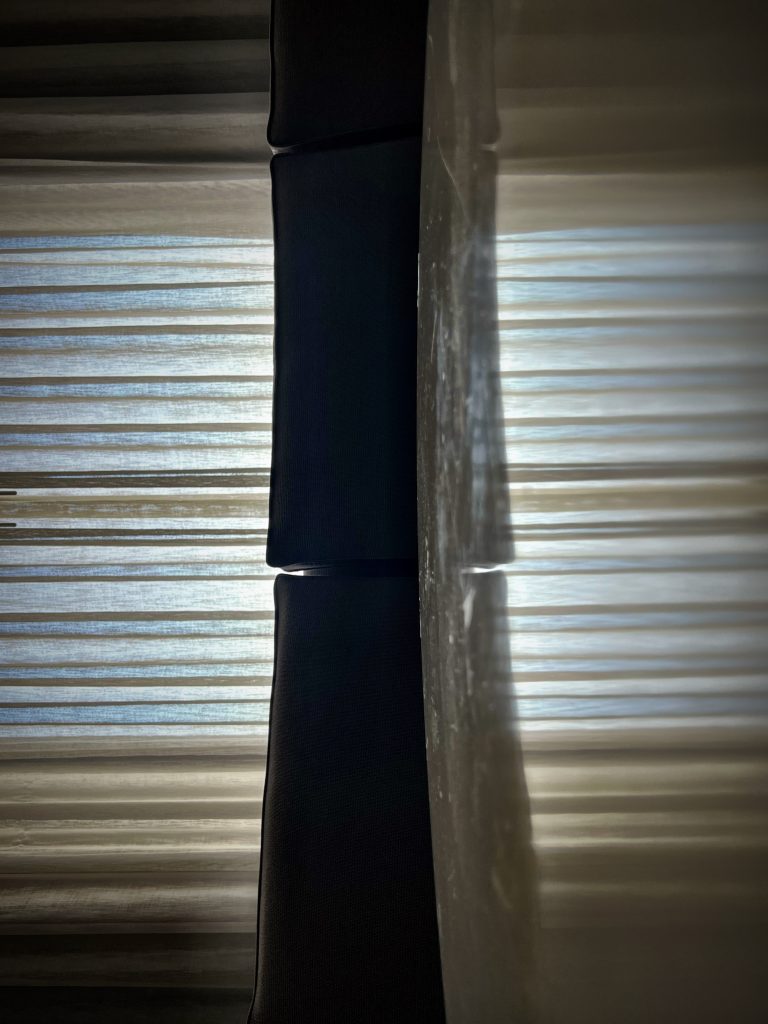
Context: Last week I attended ICFA—who are nice enough to invite me every year to read a story, comp me a couple meals, and otherwise leave me alone to mooch appetizers and wine from various receptions and schmooze with academic folks I’ve never met before and editors I know. On Saturday I attended a panel that featured Nancy Hightower, whose photography work largely focuses on capturing NYC cityscapes in puddles. Her work is absolutely stunning. Earlier that morning I’d gone to see a panel where Ann Leckie was being interviewed about her upcoming novel Radiant Star. Leckie mentioned, in passing, that she’d gotten some inadvertent writing advice while attending a beading class years ago, to the effect of “if you are looking for a structure and don’t have one, repetition always works.”
So that was what was in my head Saturday morning, when I looked at Hightower’s uncanny, liminal photographs of the exceptionally mundane airport conference hotel we’d all been living in for four days:
Mirrors are repetition machines; repetition is the fundamental rudiment of structure; structure is the lone difference between “art” and “a neat thing I saw”
… and then I was alone in my room with this shiny post-modern coffee table, and I had my phone in my hand, because I always have my phone in my hand, because we all always have our phones in our hands, and taking a picture is a helluva lot better for my mind than looking at the news one more time.
This is that picture.
Expect more of them.
This vampire is not Elizabeth Moss, she just sorta turned out looking that way. The snake doesn’t look particularly like anyone famous, I don’t think.
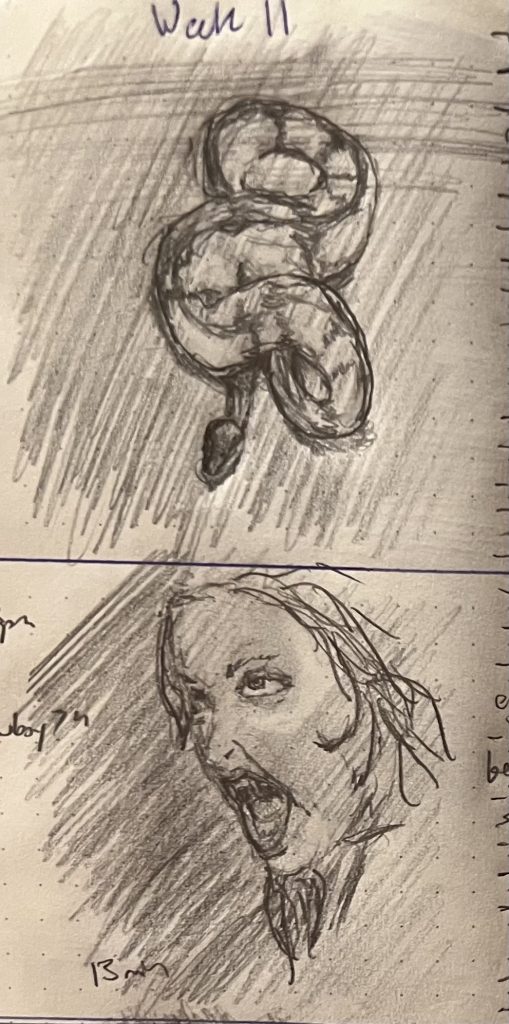
Happy Friday the 13th!
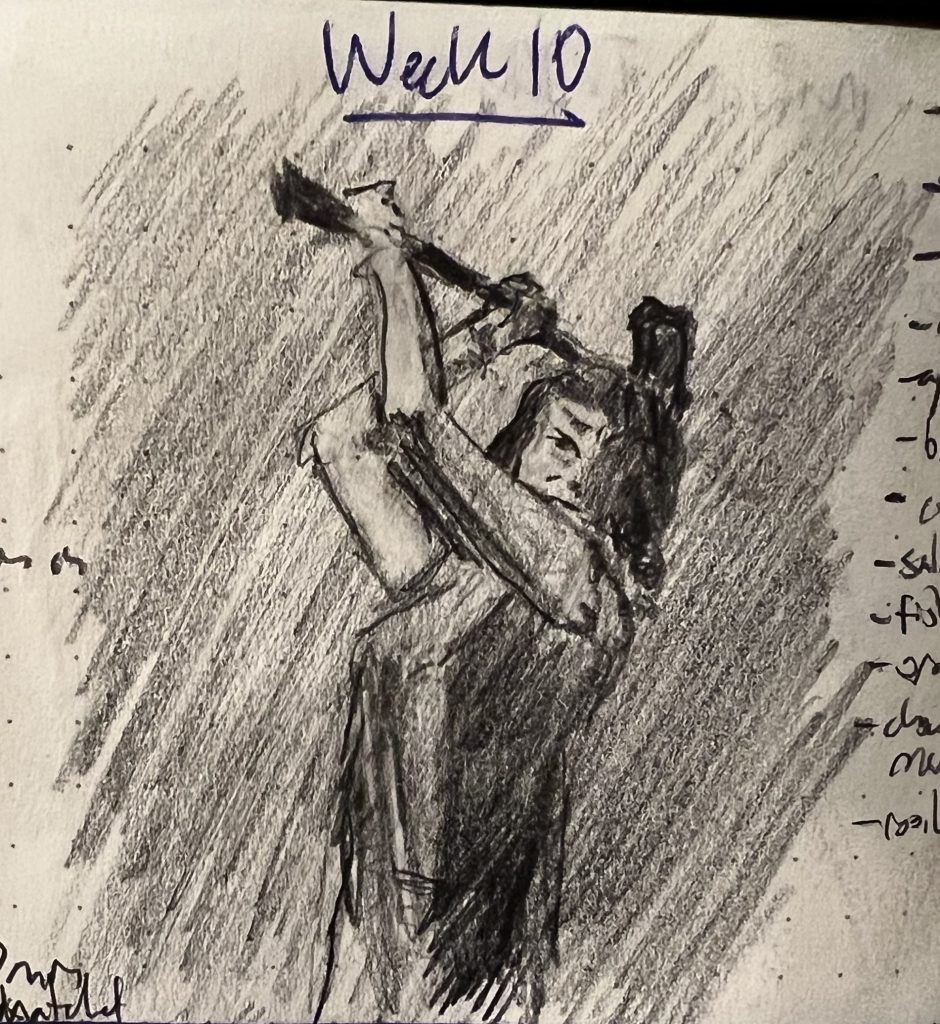
My wife and kids all preferred the first of these two sketches, while I felt the second was clearly better. This isn’t the first time we’ve disagreed about sketches, but it was the first time that none of us could intelligibly articulate why we were so certain of our position. Each just felt that it was totally self-evident which sketch was better, and trying to defend that was like trying to defend why blue is blue.
Matters of taste aside, a couple things became clear this week (which was, like last week, entirely dedicated to working with the new-to-me technique of laying down a light layer of graphite to start, so that I can draw in dark values with my pencil and “draw” in light values and highlights with my eraser):
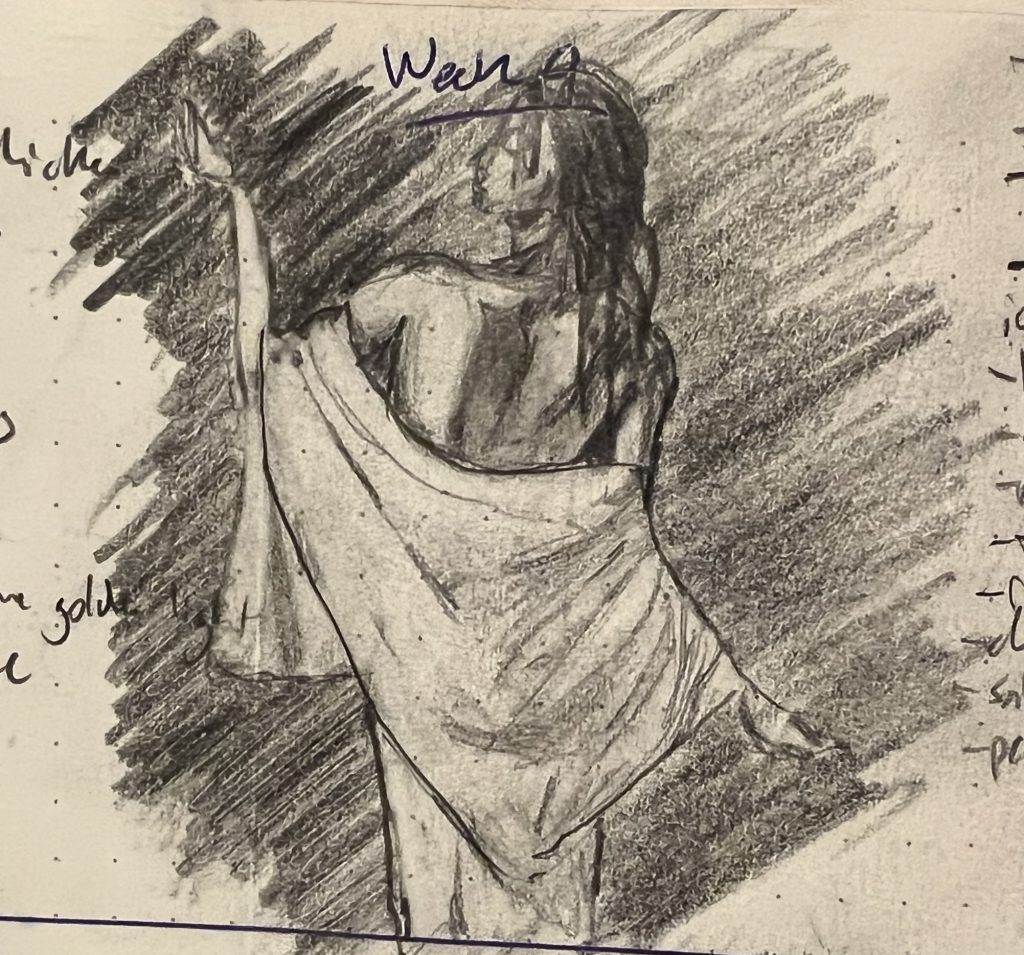
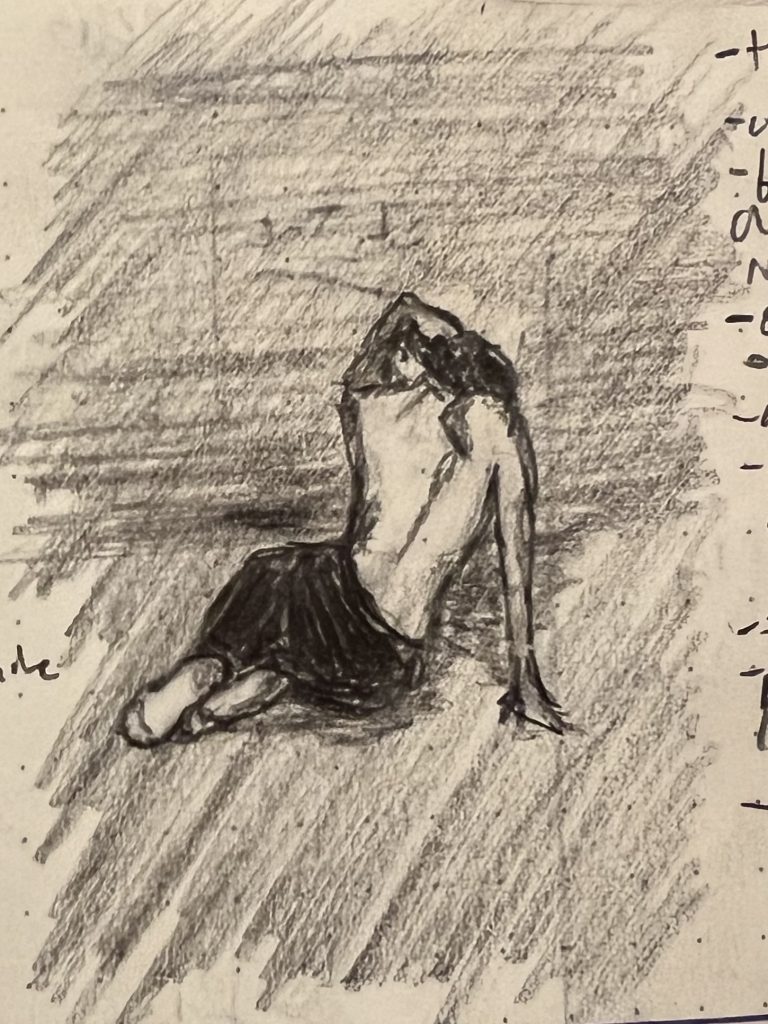
I’ve been drawing for the last month, just not posting, because I’ve been really busy, and not really happy with many of my sketches.
In the middle of last week it dawned on me that instead of just layering up graphite on blank paper, I could start a sketch by laying down a more-or-less uniform mid-tone of graphite over the entire area. Then I’d be able to draw in darker darks in the shadows, and draw in brighter highlights with the eraser. 💡🤦♀️ (I am besought by extremely obvious revelations. Ask me how old I was when I first realized that the “Little piggie that went to market” wasn’t, like, wandering the aisles of a grocery store pushing a cart.)
Anyway, the end result are sketches with a dynamic range of tonal values I’m much happier with, where I work faster and find the work much more soothing overall.
My son’s pick for the week was the bottom sketch. He liked the lips.
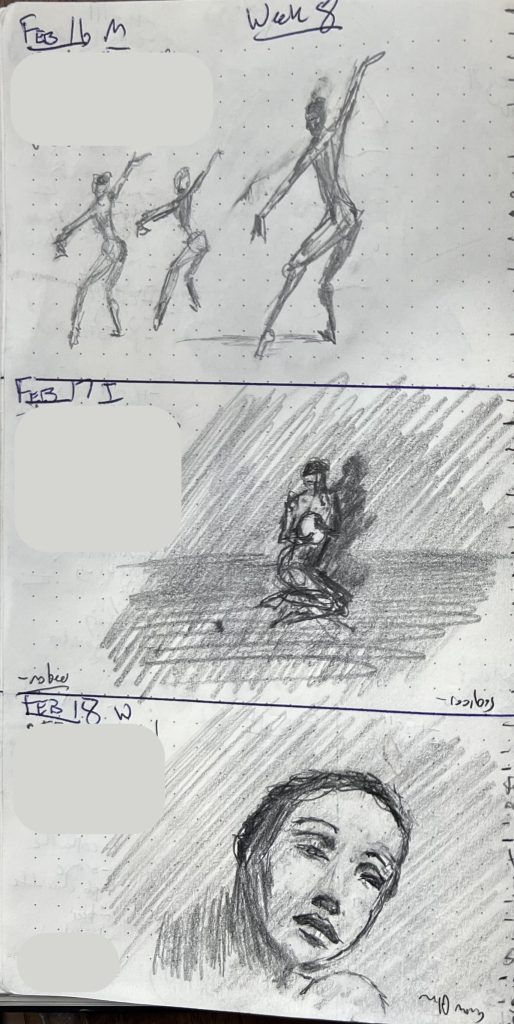
Week 4 for is pinups again—where less is more, both in terms of clothes on bodies and lines on page.
My son said this first one was the most “human and dynamic.” I picked it because it was the most arresting: I was fairly confident you’d stop and look and click. At the very least, it epitomizes something that feels really central to the pinup aesthetic, about the power and confidence of the women depicted in these pieces. They may be nude, but are not naked.
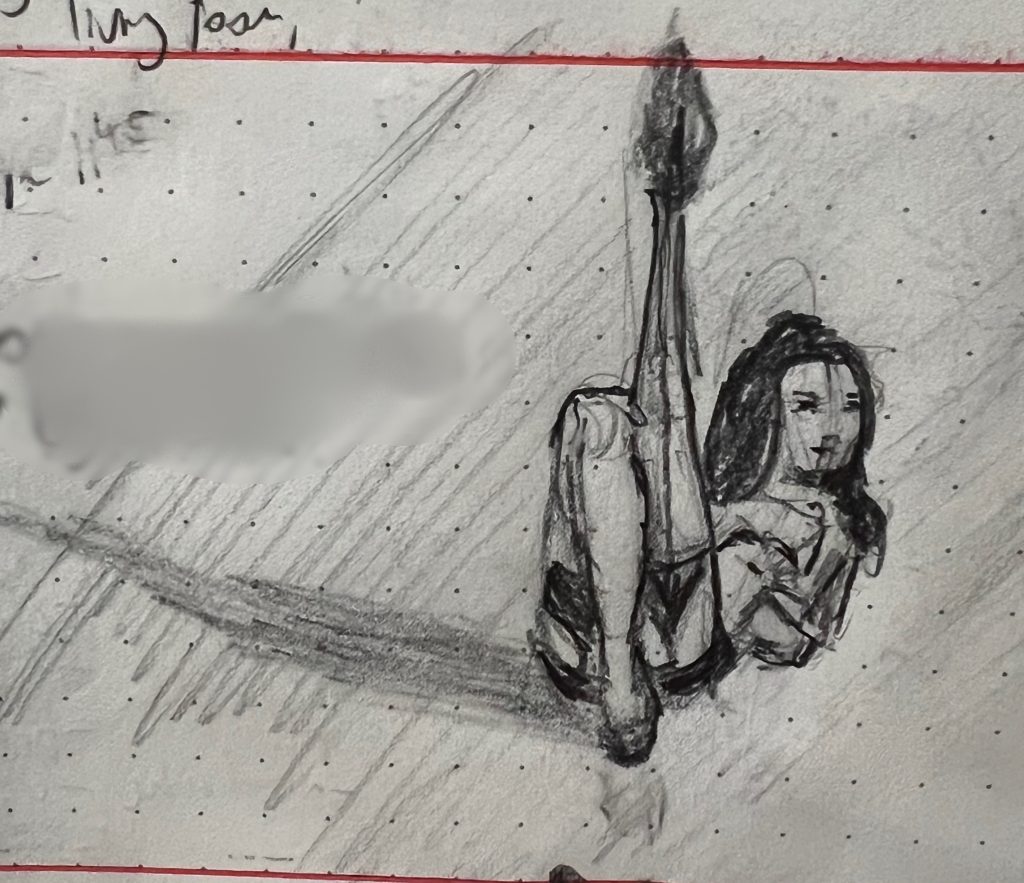
That said, I think I was probably happiest with this sketch, which was maybe the most “poetic” for lack of a better word. It captures something about being lost in the luxuriance of moving through space that I really liked.
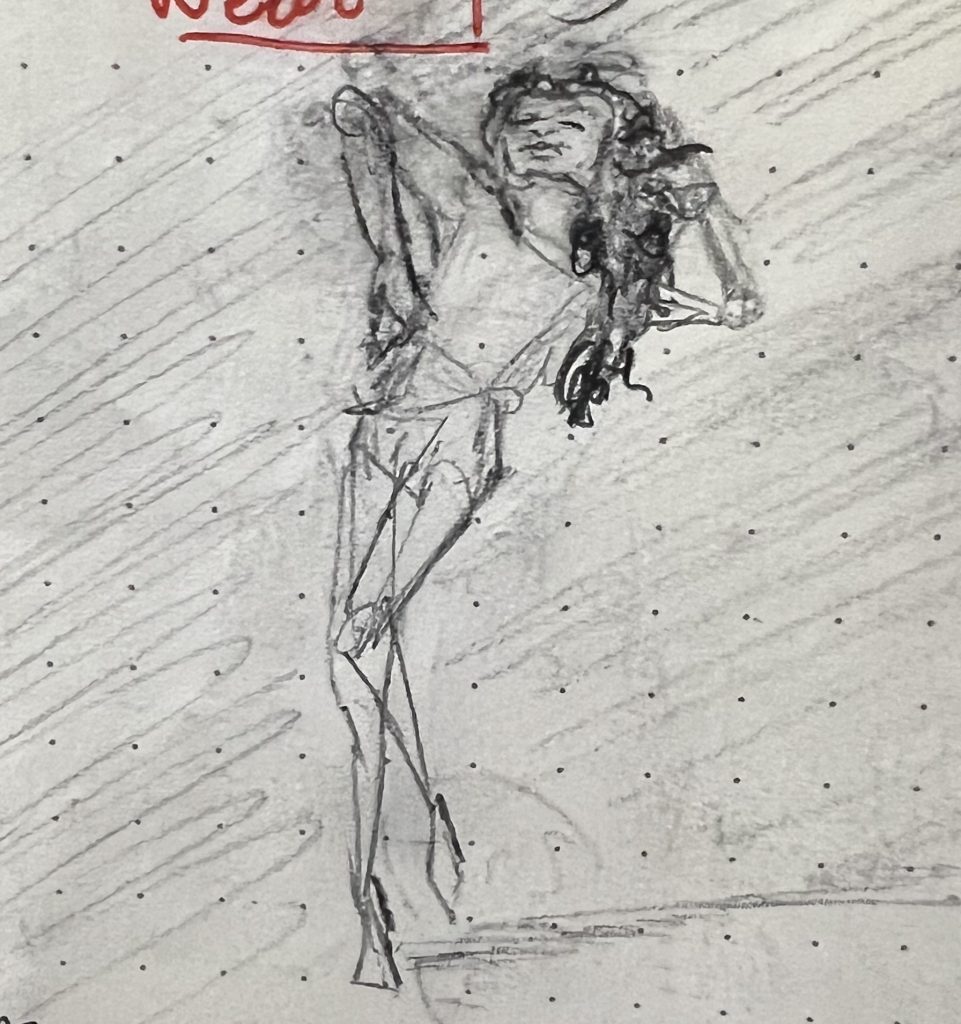
…Now hear me out:
It dawned on my last week that there is an interesting geometric regularity among images that you glance at and immediately categorize as “pinups.” More often than not, the women can be quickly visually approximated with a handful of mostly acute triangles, like so:
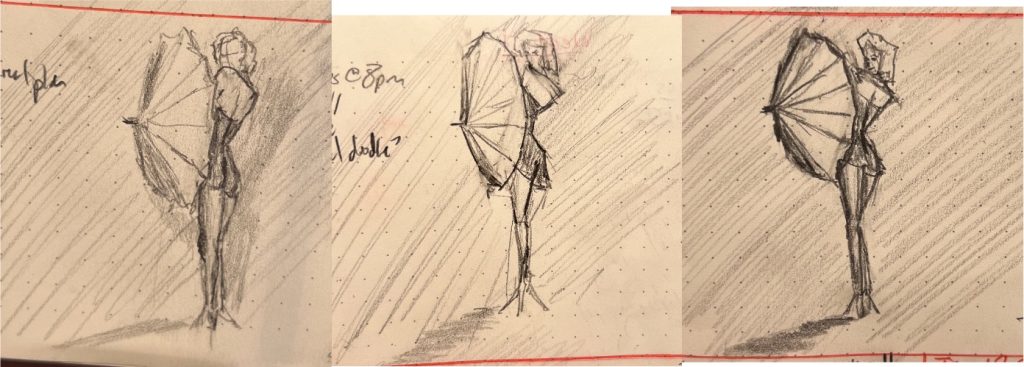
These are presented in the order I drew them over several days—the reference was an old Marilyn Monroe pinup I found on Pinterest. My son thought the one furthest to the left was the best one, because it really properly capture that coolly appraising over-the-shoulder glance (even with no eyes). I feel like I was still making her torso waaaaaay too long (a chronic problem I have sketching full-body gestures). The sketch furthest to the right is the best overall, even if it’s the least like the reference. I included the middle because, despite its flaws, it captured the “geometricness” of the pose that had caught my attention to begin with.
A couple week’s back we visited Frank Lloyd Wright’s Fallingwater, a really lovely building that perfectly illustrates why you probably shouldn’t build a poured-concrete modernist gem over an active river in a region of the country that has multiple freeze-thaw cycles each year. Here is the current state of the house (we were there on the absolute final day before they close for six months of renovations/restorations):
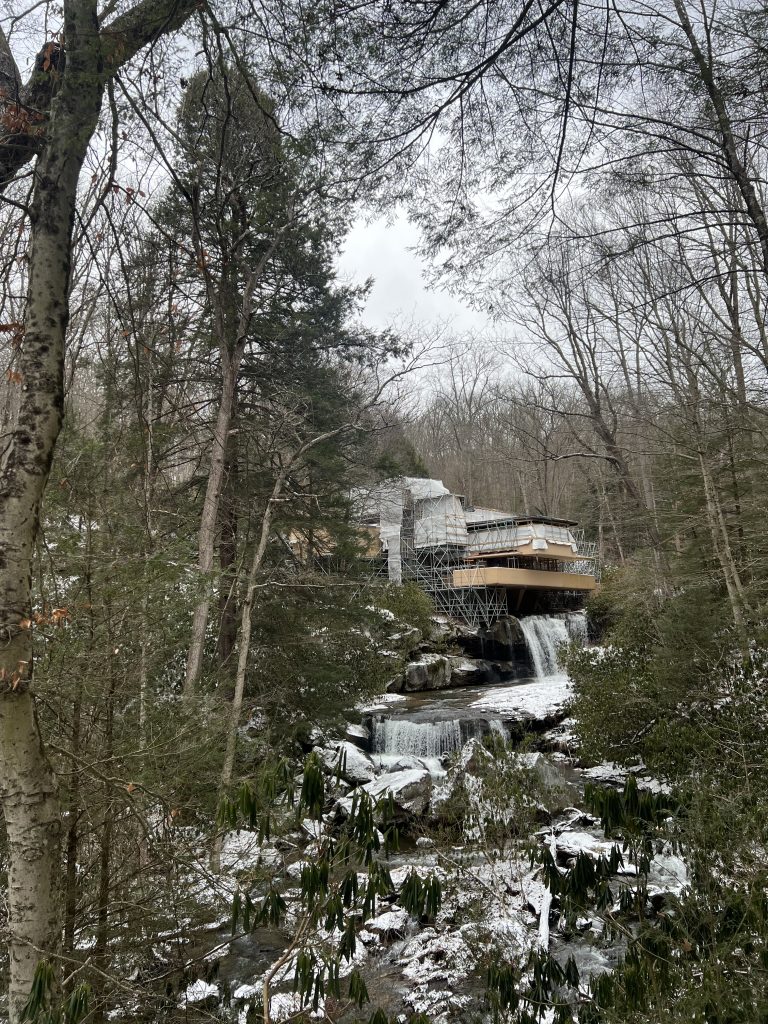
So, on the one hand, a bummer to go to an architectural gem and not be able to see it. On the other, I really loved seeing Fallingwater in situ in person (context: my father was trained as an architect, my mother as a painter and lithographer; I grew up with a lot of art and in a lot of museums and a lot of opinions about architecture and design and construction ad nauseam). I especially loved the tension between this balanced, monumental, (in)famous building and this towering unnamed pine tree.
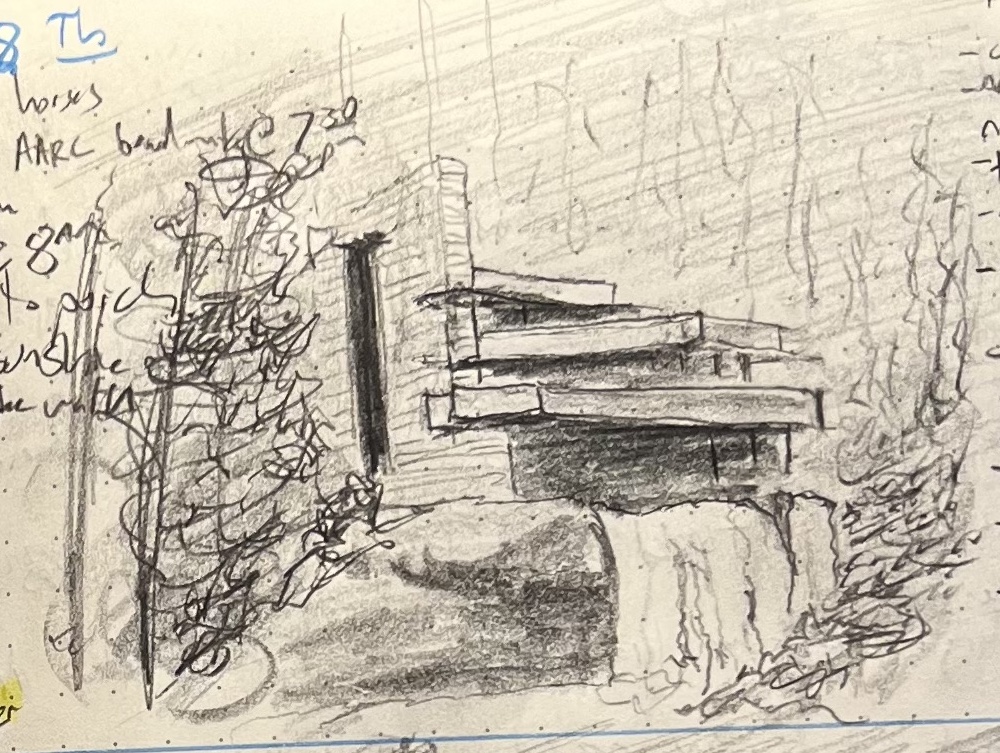
I spent the next week drawing it, compositing my photo and several existing professional shots of the building, so I could have untented Fallingwater in its place among the trees, scaled as I saw it at the end of December 2025. The results were five sketches: Fallingwater (i–v). My wife and kids were divided and which attempt came out best.
My son insisted it was Fallingwater (iii) (he couldn’t say why, but I think it’s because he was standing with me when I took the above pic, and liked how this sketch captures both cataracts and the pool between):
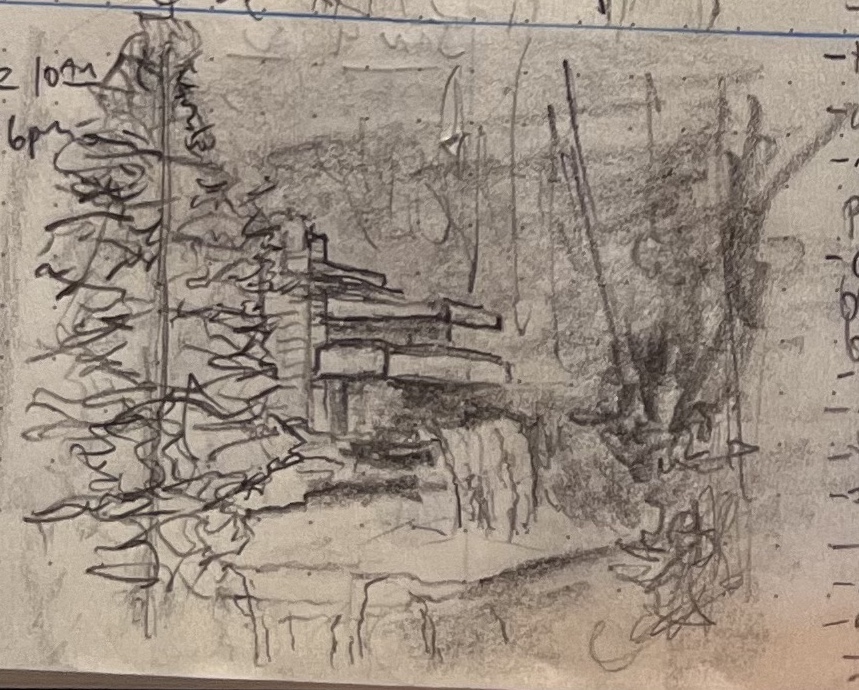
I preferred (iv), because it felt like I got the depth on the rocky outcropping right, and there was some stuff with line weight that worked out:
And my wife and daughter chose (v), with my daughter specifically liking that you could glimpse the windows and underpinning structure better:
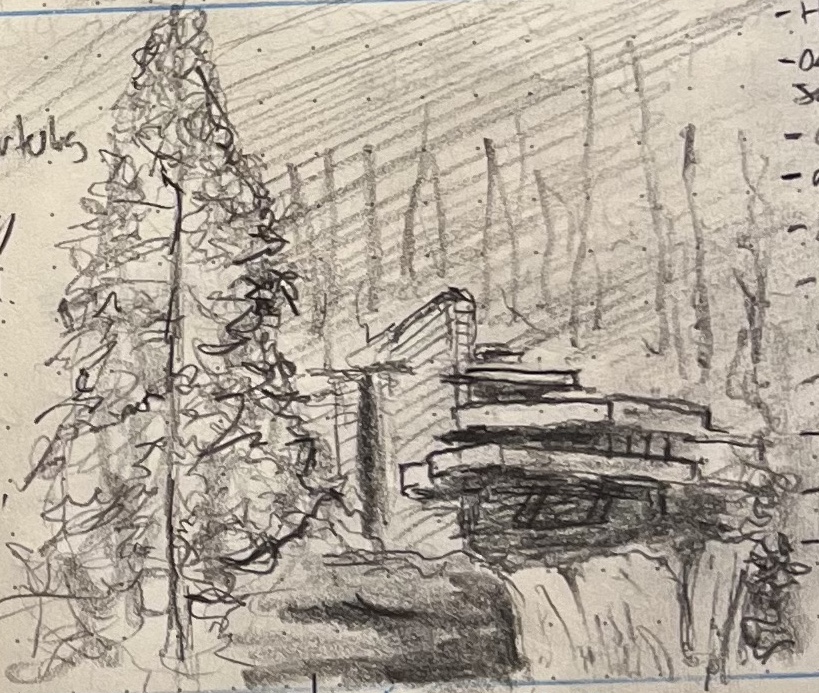
In retrospect, I agree with my wife and daughter: Fallingwater (v) is best, but mostly because it makes the tree and the building equal protagonists in the scene. Also, the rocky outcropping is pretty good.